Matchup
2026 Jeep Cherokee vs Compass NH
Two Jeeps, one showroom, and a $5,450 gap between them. We sell both, so this page has no thumb on the scale.
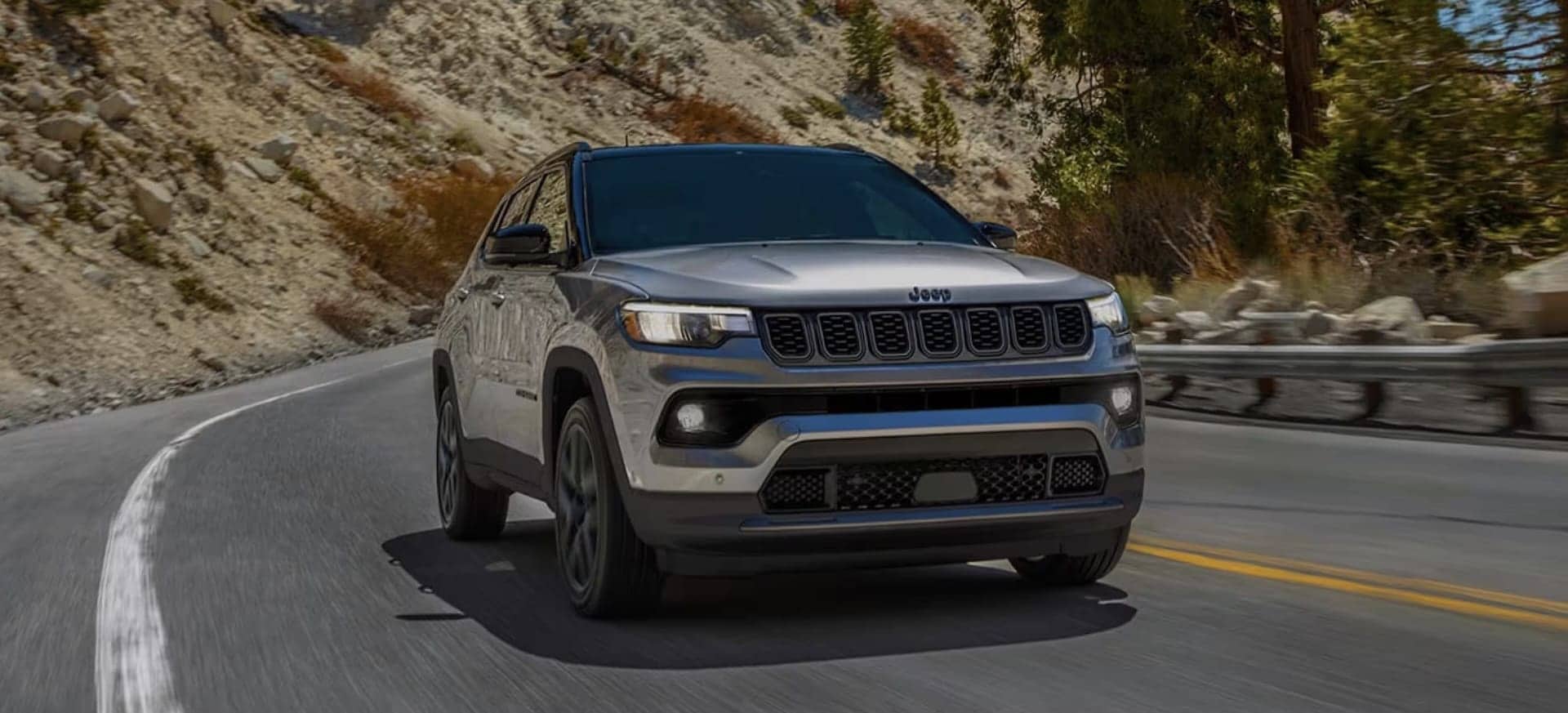
The 2026 Jeep Compass and the 2026 Jeep Cherokee are not two versions of one vehicle. They are different sizes, with different powertrains, aimed at different buyers, and the Cherokee is an all-new hybrid rather than a bigger Compass. That is the structural fact that reframes the whole comparison, and it is why "which is better" is the wrong question here.
We sell both at Jeep Portsmouth, which means we have no reason to steer you. What follows is each vehicle argued by someone who would buy it, on figures published by Jeep and the EPA, ordered by price.
The Short Answer
Buy the Compass if price and size lead your decision: it starts at $29,550 against the Cherokee's $35,000, it is more than a foot shorter so it parks and turns more easily, and four-wheel drive is standard on every trim.
Buy the Cherokee if efficiency or space lead: its hybrid powertrain returns 37 mpg combined against the Compass's 26, it carries more cargo in both configurations, it tows 3,500 pounds on a conventional hitch properly equipped, against 2,000, and its 12.3-inch touchscreen and digital cluster are standard rather than trim-dependent. Neither vehicle offers hands-free driving.
The Compass
2026 Jeep Compass Overview
A compact SUV, 173.4 inches long, seating five, starting at $29,550 excluding the $1,995 destination charge. One powertrain across all six trims: a 2.0-liter turbocharged four making 200 horsepower and 221 lb-ft through an eight-speed automatic, with four-wheel drive standard on every trim and no front-drive version offered.
Its case is straightforward. It is the less expensive vehicle by a wide margin, it is small enough to be genuinely easy in a downtown space or a single garage, and it puts equipment at the bottom of the range that rivals reserve for higher trims: heated front seats, a heated steering wheel, remote start and blind-spot monitoring are all standard on the $29,550 Latitude. The Trailhawk adds real off-road hardware, including a low range with a 20:1 crawl ratio, that nothing in the Cherokee lineup matches.
The Cherokee
2026 Jeep Cherokee Overview
An all-new midsize SUV returning to the lineup for 2026, 188.1 inches long, starting at $40,905 for the 85th Anniversary Edition and $35,000 at the bottom of its range, excluding the same $1,995 destination charge. It is hybrid-only: a 1.6-liter turbocharged four as part of a full hybrid system producing 210 horsepower and 230 lb-ft combined, through a power-split transmission, with four-wheel drive standard. There is no plug-in version and no conventional gasoline version.
Its case is equally straightforward. The hybrid returns 37 mpg combined, which is a large advantage over anything non-hybrid in the segment and the single strongest argument either vehicle makes. It is substantially larger inside and out, it tows 3,500 pounds on a conventional hitch properly equipped, without a trim restriction, and its standard technology is more generous, with a 12.3-inch touchscreen and a 10.25-inch digital cluster on every version rather than stepping up through trims.
Compared
Powertrain and Performance Compared
| | 2026 Compass | 2026 Cherokee |
|---|
| Engine | 2.0L turbocharged four | 1.6L turbocharged four, full hybrid |
| Horsepower | 200 hp | 210 hp combined |
| Torque | 221 lb-ft | 230 lb-ft combined |
| Transmission | Eight-speed automatic | Power-split hybrid transmission |
| Drivetrain | Four-wheel drive standard | Four-wheel drive standard |
| EPA combined | 26 mpg | 37 mpg |
| Towing, conventional hitch, properly equipped | 2,000 lbs properly equipped, Trailhawk with the Trailer-Tow Group only | 3,500 lbs |
| Low range | Yes, on Trailhawk, 20:1 crawl ratio | Not offered |
EPA estimates from fueleconomy.gov. Actual mileage varies.
The efficiency gap is the headline and it is large. Eleven miles per gallon combined is not a rounding difference, and over a year of ordinary driving it is real money. The output figures are close enough to be a wash on paper, though the two deliver it differently: the Compass makes its torque from 1,750 rpm through a conventional automatic, while the hybrid supplements with electric assist from a standstill.
Towing splits cleanly. Both figures are conventional-hitch, properly-equipped ratings. The Cherokee's 3,500 pounds applies across its range; the Compass's 2,000 pounds requires the Trailhawk with the Trailer-Tow Group, and no other Compass trim carries a towing rating at all. In the other direction, the Compass Trailhawk offers a genuine low range with a 20:1 crawl ratio, Rock mode and Hill Descent Control. The Cherokee does not offer a low range.
Space and Screens
Size, Interior and Technology Compared
| | 2026 Compass | 2026 Cherokee |
|---|
| Length | 173.4 in | 188.1 in |
| Wheelbase | 103.8 in | 113.0 in |
| Seating | Five | Five |
| Cargo behind the second row | 27.2 cu ft | 33.6 cu ft |
| Maximum cargo | 59.8 cu ft | 68.3 cu ft |
| Rear legroom | 38.3 in | 38.5 in |
| Ground clearance | 8.1 in, 8.6 in on Trailhawk | 8.0 in |
| Standard touchscreen | 8.4 in, 10.1 in on five trims | 12.3 in, standard |
| Digital cluster | 7 in, 10.25 in on two trims | 10.25 in, standard |
| Hands-free driving | Not offered | Not offered |
Rear legroom is effectively identical, 0.2 inches apart, which is inside the margin where a claim would be meaningless. Everything else about size goes the Cherokee's way: it is more than a foot longer on a longer wheelbase, and it carries 6.4 more cubic feet behind the second row and 8.5 more with the seats folded.
The size advantage cuts both ways, and which side you land on depends on your street rather than on the spec sheet. A vehicle of that length and wheelbase is a bigger thing to put in a downtown Portsmouth space or a single-bay garage than a 173-inch one, and the Compass turns in a tighter circle.
On screens the Cherokee is plainly ahead: 12.3 inches and a full digital cluster on every version, against a Compass that starts at 8.4 inches and reaches 10.1 on five of six trims. Both offer wireless Apple CarPlay and Android Auto compatibility as standard, and neither offers hands-free driving: the Compass's Active Driving Assist and the Cherokee's driver-assistance system both require hands on the wheel.
Money
Pricing Compared
| | 2026 Compass | 2026 Cherokee |
|---|
| Starting MSRP | $29,550 | $35,000 |
| Top of the range | $35,555 | $43,000 |
| Destination charge | $1,995, identical on both |
| Trims offered | Six | Five |
MSRPs exclude the $1,995 destination charge, taxes, title and registration. Pricing subject to change.
Both figures sit on the same basis, since the destination charge is identical, so the comparison is clean. The Compass starts $5,450 lower and its most expensive trim is $555 above where the Cherokee's range begins. Put plainly: a fully loaded Compass and an entry Cherokee are roughly the same money, and that is the most useful way to frame the decision.
The efficiency difference works against the price gap over time. Whether it closes it depends entirely on your annual mileage, and that is arithmetic worth doing with your own numbers rather than accepting a generic payback claim.
Warranty coverage is identical on both, since they are the same brand: 3 years or 36,000 miles bumper to bumper, 5 years or 60,000 miles on the powertrain, and 5 years or 60,000 miles of roadside assistance. That takes coverage off the table as a deciding factor between these two.
What Each One Is For
Where Each One Wins
Where the Compass wins: when the vehicle has to fit your life
It starts $5,450 lower and tops out $7,445 lower, on the same destination basis, so a fully equipped Compass sits at about the price where the Cherokee range begins. It is more than a foot shorter on a shorter wheelbase and turns in a tighter circle, which is what makes it easy in a downtown space, an older single-bay garage or a tight driveway.
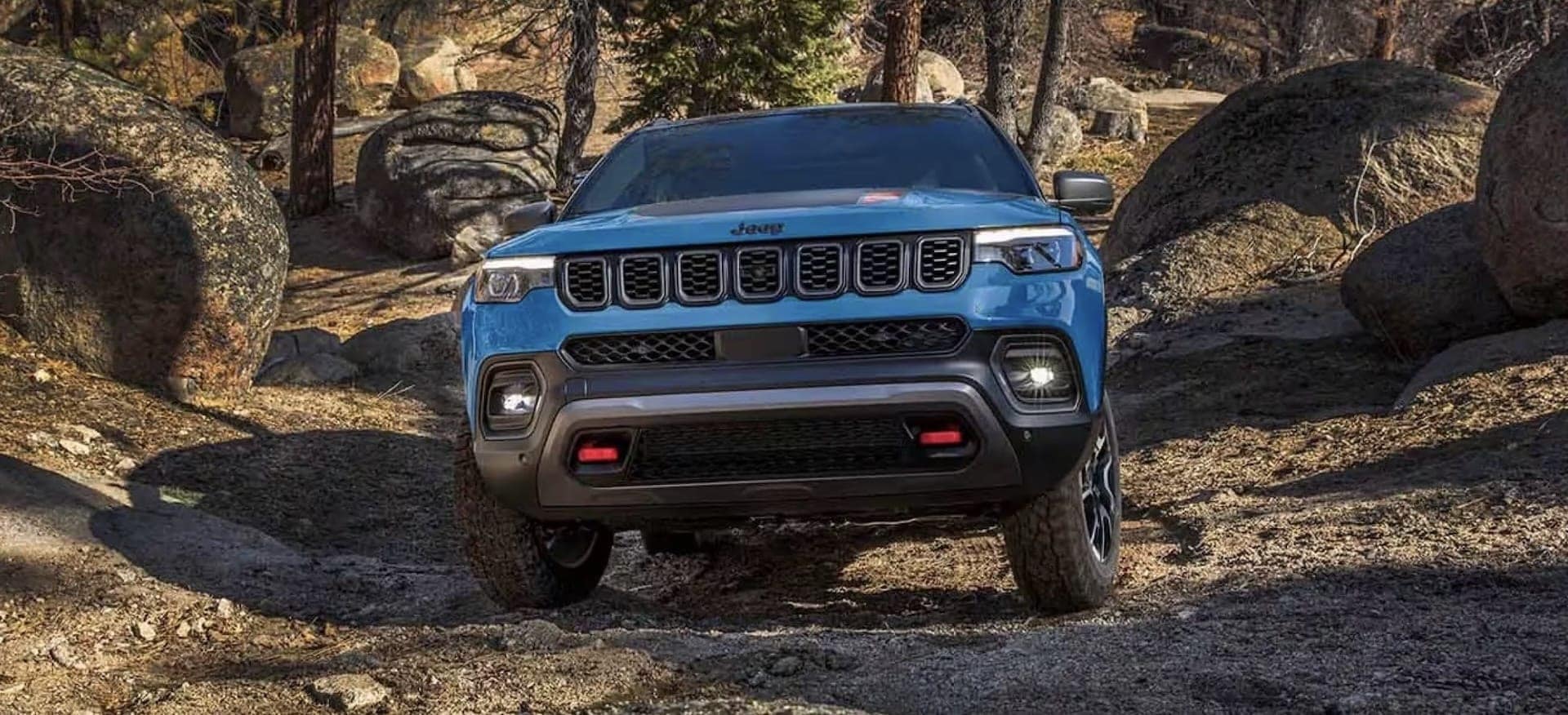
It also puts equipment at the bottom of its range that buyers usually step up for: four-wheel drive, heated front seats, a heated steering wheel and remote start are all standard on the $29,550 Latitude. And in Trailhawk form it does something the Cherokee lineup does not offer at any price — a genuine low range geared 20:1, Rock mode, Hill Descent Control, four skid plates and all-terrain tires, with 8.6 inches of ground clearance.
Where the Cherokee wins: when the vehicle has to carry your life
Its hybrid powertrain is EPA-rated at 37 mpg combined against the Compass's 26, which is the largest single difference between the two and the strongest argument either makes. Over a high-mileage year that gap is real money, and it is worth doing the arithmetic with your own annual mileage rather than a rule of thumb.
It is also the bigger vehicle in every dimension that matters for hauling: 33.6 cubic feet behind the second row against 27.2, and 68.3 maximum against 59.8. It tows 3,500 pounds on a conventional hitch, properly equipped, across its whole range, where the Compass's 2,000-pound rating belongs to one trim with an option group. Its standard technology is more generous too, with a 12.3-inch touchscreen and a 10.25-inch digital cluster on every version.
Two places the two are effectively level, worth saying so you do not read a difference into them: rear legroom is 0.2 inches apart, which is a tie, and neither vehicle offers hands-free highway driving.
Choose
Which One Should You Buy?
| If this is you | Buy this | Why |
|---|
| You drive a lot of miles a year | Cherokee | 37 against 26 mpg combined compounds fast at high mileage |
| Budget is the deciding factor | Compass | $5,450 less to start, with four-wheel drive and heated seats already standard |
| You park somewhere tight, or have an older garage | Compass | More than a foot shorter, with a tighter turning circle |
| You haul gear, or people plus gear, regularly | Cherokee | 6.4 more cubic feet behind the second row, 8.5 more with it folded |
| You tow a trailer or a boat | Cherokee | 3,500 pounds on a conventional hitch, properly equipped, on any version |
| You actually go off-road | Compass Trailhawk | Low range, Rock mode and Hill Descent Control; the Cherokee has no low range |
We sell both, so there is no default answer and no reason to invent one. Two questions settle it for most people: how many miles do you drive a year, and how big a vehicle do you want to park? Answer those and the choice usually makes itself. If they point in opposite directions, drive them back to back and the size question resolves in about ten minutes.
Local
Shop Both at Jeep Portsmouth
We are at 2355 Lafayette Rd, Portsmouth, NH 03801, reachable at (603) 431-8900, and we stock both vehicles. Driving them back to back on the same afternoon settles this comparison faster than any table, because the size difference is something you feel immediately and the hybrid's behaviour at low speed is something you either like or you do not.
The regional argument applies to both equally: where the road is wet, salted or frozen for a third of the year, standard four-wheel drive on every version of both vehicles takes the drivetrain question off the table entirely. Take a pair out toward Greenland and Stratham, or up Route 16, and see which size suits the roads you actually drive.
Questions
Compass vs Cherokee FAQs
Is the Jeep Cherokee bigger than the Jeep Compass?
Yes. The 2026 Cherokee is 188.1 inches long on a 113.0-inch wheelbase, against the Compass at 173.4 inches on a 103.8-inch wheelbase. That is more than a foot of extra vehicle. It also carries more cargo, 33.6 cubic feet behind the second row against 27.2. Rear legroom, though, is effectively identical at 38.5 against 38.3 inches.
Which is more fuel efficient, the Compass or the Cherokee?
The Cherokee, by a wide margin. Its hybrid powertrain is EPA-rated at 37 mpg combined against the Compass's 26 mpg combined. That eleven-mpg gap is the largest single difference between the two vehicles.
How much more expensive is the Cherokee than the Compass?
$5,450 more to start: $35,000 against $29,550, both excluding the identical $1,995 destination charge. At the top of each range the gap is $7,445. A fully loaded Compass at $35,555 costs about the same as an entry Cherokee.
Which one tows more, and on what basis?
The Cherokee, at 3,500 pounds on a conventional hitch properly equipped, across its range with no trim restriction. The Compass is rated at 2,000 pounds properly equipped, and only as a Trailhawk fitted with the Trailer-Tow Group on a conventional hitch; no other Compass trim carries a towing rating at all.
Which is better off-road, the Compass or the Cherokee?
The Compass Trailhawk, and it is not close on hardware. It brings a true low range geared 20:1, plus Rock mode, Hill Descent Control, underbody skid plates, recovery hooks and all-terrain tires. The Cherokee does not offer a low range. Note this applies to the Trailhawk specifically; the other five Compass trims are capable in snow but are not trail vehicles either.
Is the 2026 Cherokee a hybrid?
Yes, and only a hybrid. It uses a 1.6-liter turbocharged four as part of a full hybrid system producing 210 horsepower and 230 lb-ft combined. There is no plug-in version and no conventional gasoline version. The Compass, by contrast, offers no hybrid at all.
Do either of them offer hands-free driving?
No, neither does. The Compass offers Active Driving Assist as an option on two trims and it requires hands on the wheel at all times. The Cherokee's driver-assistance system is likewise hands-on. Jeep's hands-free system is built for specific Grand Cherokee configurations only.
Drive Them Back to Back
We stock both, so there is no reason to guess. An hour with the two of them settles the size question and the hybrid question at the same time.
Keep Researching