Ownership
2026 Jeep Grand Wagoneer Maintenance Schedule NH
Oil intervals governed by the indicator, the 30,000 to 100,000 mile services, and what the salt on NH roads changes about all of it.
Oil cap 10,000 mi or 12 months0W-20 full synthetic3 yr / 36,000 mi basic5 yr / 60,000 mi powertrain
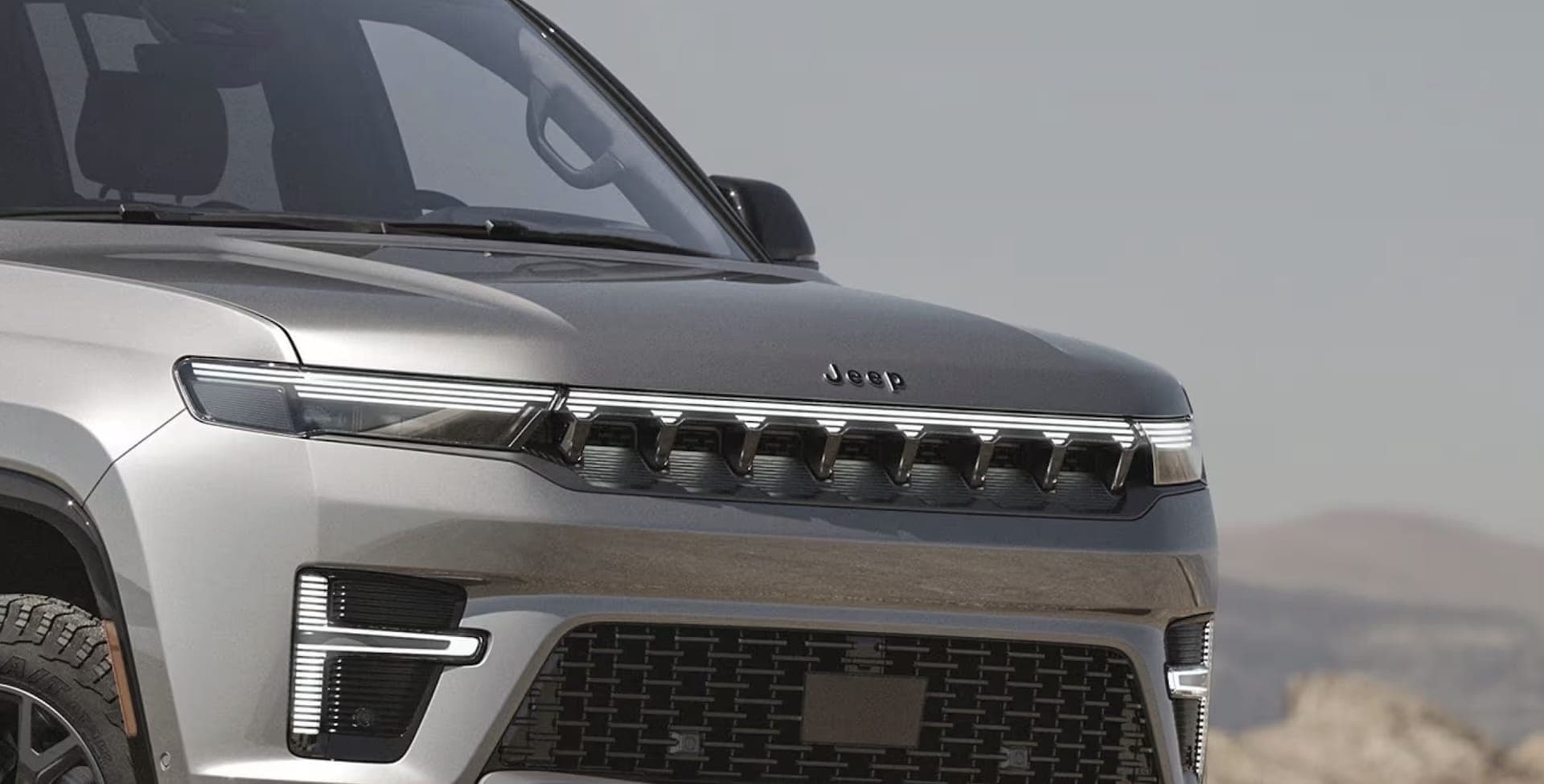
A Grand Wagoneer is a significant purchase, and what protects it is unglamorous: oil changed on the indicator's schedule rather than a number you remember, fluids replaced at the right milestone, and an underbody that gets washed through a NH winter. This page lays out the published maintenance schedule for the 2026 Grand Wagoneer, the warranty terms behind it, and the honest reliability picture on a vehicle in its first year under a new name.
Our service department at Jeep Portsmouth works on Jeeps and nothing else, which on a vehicle running the Hurricane twin-turbo six matters more than it would on a common engine. Book online through the service scheduler or call (603) 431-8900.
The Schedule
Grand Wagoneer Recommended Maintenance Schedule
Jeep does not run this vehicle on a fixed mileage schedule. An oil change indicator system monitors how the engine has actually been used and tells you when service is due, and the rest of the schedule hangs off that interval rather than off the odometer.
| When | What happens |
|---|
| Monthly, and before any long trip | Check engine oil level, all exterior and interior lights, battery terminals and connections, brake pads and rotors and fluid level, steering and suspension components and axle boots, wiper blades and washer fluid, and coolant reservoir level |
| At every oil change interval, as the indicator calls it | Change engine oil and filter; rotate tires; inspect and clean battery terminals; inspect CV and universal joints; inspect brake pads, shoes, rotors, drums, hoses and the parking brake; inspect the cooling system and hoses; inspect the exhaust system; inspect the engine air filter if driven in dusty or off-road conditions; clean and grease the power side step linkages |
| Every 12,000 miles | Replace the cabin air filter |
| 10 years or 150,000 miles | Flush and replace the engine coolant |
Oil
Oil Change Intervals and Recommended Oil
The indicator decides, and there are three hard limits behind it. Jeep's guidance for the 3.0-liter engine is unambiguous: under no circumstances should the oil change interval exceed 10,000 miles or 12 months, whichever comes first. The controller also watches engine run time and will illuminate the indicator after 350 hours, which mostly affects vehicles that idle heavily. Once the indicator displays, service the vehicle within the next 500 miles.
Real intervals land well short of the 10,000 mile cap for most drivers here. Towing is named by Jeep as a condition that shortens the interval, and so is the short-trip, cold-start driving pattern that a NH winter produces: a vehicle that never fully warms up on a five-mile run to Portsmouth is harder on oil than one doing highway miles. If you tow a boat in summer and do school runs in February, expect the indicator to come on sooner than a friend's does in a milder climate.
Oil specification: the factory fill for the 3.0L Hurricane is Pennzoil Ultra Platinum 0W-20 GF6+, API SP. Oil capacity is 7.5 quarts with the filter. A twin-turbocharged engine is less forgiving about oil quality than a naturally aspirated one, because the turbo bearings are lubricated by the same oil and run hot, so this is not a place to economise on grade.
Milestones
Major Service Milestones
| Milestone | Work performed |
|---|
| 30,000 miles | Inspect CV and universal joints; inspect front suspension and tie rod ends and replace if necessary; inspect front and rear axle fluid; inspect brake linings and parking brake function; replace the engine air cleaner filter |
| 60,000 miles | All of the above, plus inspect the transfer case fluid |
| 100,000 miles | All of the above, plus replace the spark plugs, replace the accessory drive belt, inspect the belt tensioner and pulley and replace if necessary, change the transfer case fluid, and replace the PCV valve |
Two notes on that table. The axle fluid inspection converts to a fluid change if the vehicle is used for police, taxi or fleet duty, off-road, or for frequent trailer towing, so a Grand Wagoneer that tows regularly follows a shorter schedule than one that does not. And the spark plug interval is mileage-based only: the yearly alternative that applies to most other items does not apply to plugs, so a low-mileage vehicle does not need them early.
Wear Items
Common Grand Wagoneer Service Items
Tires. Rotation happens at every oil service rather than on a fixed mileage, and Jeep adds a useful instruction: rotate at the first sign of irregular wear even if it appears before the indicator turns on. On a vehicle weighing between 5,730 and 6,444 pounds, tires are a real running cost, and the configuration matters. A Summit on 285/45R22 Pirellis is a more expensive set to replace than a base car on 275/65R18 Bridgestones, and the 22-inch tire has less sidewall to absorb a pothole.
Brakes. Inspected at every oil service. Note that brake rotors, pads, linings and drums fall under the 1-year, 12,000-mile specified-components term rather than the 3-year basic warranty, because they are wear items. Towing accelerates brake wear noticeably.
Filters. The cabin air filter is on its own 12,000-mile schedule. The engine air filter is replaced at the 30,000-mile milestone, and inspected sooner if the vehicle sees dust or off-road use.
Fluids. Axle fluid inspected at 30,000 miles and changed early under towing or off-road duty. Transfer case fluid inspected at 60,000 and changed at 100,000. Coolant runs to 10 years or 150,000 miles.
Underbody washing. Not on any manufacturer schedule, and on the NH coast it belongs on yours. Salt arrives from the road and from the air here, and the rust-through warranty covers perforation of outer panels rather than corrosion of brackets, fasteners and trailer wiring. A wash that includes the underbody through salt season is the cheapest preventive work you can do on this vehicle.
Reliability
Grand Wagoneer Reliability and Common Issues
Honest framing first: the 2026 Grand Wagoneer is a first-year vehicle under a consolidated nameplate, and there is not yet enough fleet age to draw meaningful long-term reliability conclusions about it specifically. Anyone publishing a confident reliability verdict on this exact model year is extrapolating.
What is on the record are two open NHTSA safety recalls. One covers a front camera wiring harness that may not be connected properly, which can prevent the rearview camera image from displaying. The other covers brake system control module software that can cause a loss of electronic stability control and electronic brake assist. Both are corrected at no charge, and both read as the early-production items a first-year vehicle attracts rather than as design faults. We can check any VIN against open recalls before you buy or when you bring a vehicle in.
The climate reality here is its own reliability factor and it is not model-specific. Salt season runs roughly November through March on this coast, the freeze-thaw cycle opens potholes by late winter, and shore air carries salt year-round. Those conditions are harder on brake hardware, suspension components and wiring connectors than the national average, which is why the inspection items at every oil service matter more here than the schedule alone suggests.
Cost to Own
What a 2026 Grand Wagoneer Costs to Own
Rather than quote service prices that vary by vehicle and change with parts costs, here are the structural facts that actually drive what you will spend, all of them verifiable before you buy.
| Cost factor | What to know before you buy |
|---|
| No complimentary maintenance | Jeep includes no free scheduled maintenance program for 2026. Your first oil change is yours. Some rivals include a first visit, so factor it when comparing |
| Oil capacity of 7.5 quarts | Larger than a typical crossover, in a full synthetic 0W-20. Oil changes cost more than on a smaller vehicle, and stretching the interval to save money is a false economy on a turbocharged engine |
| Wheel and tire size | The 22-inch tires on Summit and Limited Reserve cost meaningfully more to replace than the 18-inch on the base car, and offer less sidewall protection against potholes |
| Fuel | Regular 87 octane is acceptable and 89 is recommended, so this is not a premium-fuel vehicle. EPA combined runs 18 to 19 mpg depending on configuration |
| Towing duty | Frequent towing shortens the oil interval and converts the axle fluid inspection into a change. Budget for a shorter service cadence than the schedule implies |
| Warranty coverage | 3 years or 36,000 miles basic, 5 years or 60,000 miles powertrain, with wear items at 1 year or 12,000 miles. Roadside assistance runs 5 years or 60,000 miles |
The full warranty table, including the corrosion terms that matter most on this coast, is on the specs page. Outer panel rust-through is covered for 5 years with no mileage limit, and all panels for 3 years with no mileage limit.
Service
Service Your Grand Wagoneer at Jeep Portsmouth
We are at 2355 Lafayette Rd, Portsmouth, NH 03801, and our service department is reachable at (603) 431-8900 or through the online scheduler. Being a Jeep-only rooftop means our technicians see the Hurricane twin-turbo six routinely rather than occasionally, and we stock genuine Mopar parts and the correct 0W-20 specification rather than a near-enough substitute.
For quicker work there is the Mopar Express Lane, which handles oil services, rotations and inspections without an appointment. Current offers are on our specials page, and the parts department can supply filters and fluids if you do your own work. Customers reach us easily from Somersworth, Rochester and the Route 16 corridor, and from across the river in Berwick.
Questions
Grand Wagoneer Maintenance FAQs
How often does a 2026 Grand Wagoneer need an oil change?
The oil change indicator decides, based on how the engine has actually been used. The hard limits are 10,000 miles or 12 months, whichever comes first, and the indicator also triggers after 350 hours of engine run time. Once it displays, service the vehicle within the next 500 miles. Towing and short cold-start trips both shorten the real interval.
What oil does the 3.0L Hurricane engine take?
The factory fill is Pennzoil Ultra Platinum 0W-20 GF6+, API SP, and capacity is 7.5 quarts with the filter. Because the turbochargers share the engine's oil supply and run hot, using the correct full synthetic specification matters more on this engine than on a naturally aspirated one.
How often should I rotate the tires?
At every oil change interval, as called by the indicator, rather than on a fixed mileage. Jeep adds that you should rotate at the first sign of irregular wear even if that happens before the indicator turns on. There is no separate published rotation mileage for this vehicle.
What happens at the 100,000 mile service?
Spark plugs are replaced, the accessory drive belt is replaced and its tensioner and pulley inspected, the transfer case fluid is changed, and the PCV valve is replaced. That is on top of the recurring inspections of CV joints, front suspension and tie rods, axle fluid, and brakes, plus a new engine air cleaner filter. The spark plug interval is mileage-based only, so a low-mileage vehicle does not need them early.
Does the 2026 Grand Wagoneer include free maintenance?
No. There is no complimentary scheduled maintenance program for 2026 Jeep vehicles. Warranty coverage is 3 years or 36,000 miles basic and 5 years or 60,000 miles powertrain, with wear items such as brake pads and rotors covered for 1 year or 12,000 miles. Roadside assistance runs 5 years or 60,000 miles.
Is the 2026 Grand Wagoneer reliable?
It is too early to say with any confidence. This is a first-year vehicle under a consolidated nameplate and there is not enough fleet age for meaningful long-term data. What is on the record are two open NHTSA recalls, one for a front camera wiring harness affecting the rearview camera display and one for brake control module software affecting stability control, both repaired at no charge. We can check any VIN for you.
Does towing change the maintenance schedule?
Yes, in two documented ways. Jeep names trailer towing as a condition that shortens the oil change interval, so the indicator will call for service sooner. And frequent trailer towing converts the axle fluid inspection at 30,000 and 60,000 miles into an actual fluid change. If you tow regularly, plan on a shorter service cadence than the base schedule suggests.
What should I do differently owning one through a NH winter?
Wash the underbody regularly through salt season, not just the paint. Salt reaches this vehicle from the road and from shore air, and the rust-through warranty covers perforation of outer panels rather than corrosion of brackets, fasteners and trailer wiring. Also expect a shorter real oil interval, since repeated short cold-start trips are harder on oil than highway miles.
Book Your Next Service
Factory-trained technicians, genuine Mopar parts, and the correct oil specification for the Hurricane six. Same-day work on most routine items.
Keep Researching