

The 2026 Jeep Recon is rated for more range in town than on the highway. Around here that inverts the whole winter argument, and almost nobody knows it.
Quick Answer
- The 2026 Jeep Recon is EPA-rated at 250 miles in the city and 196 on the highway (fueleconomy.gov), so local Seacoast driving uses the higher figure.
- Cold reduces range on every electric vehicle; a 240-volt home charger refills 5 to 80 percent in about 6.8 hours, so you start every morning full.
- Every Recon Moab has 33-inch all-terrain tires, 9.1 inches of ground clearance and a rear locking differential as standard.
- The battery, drive modules and high-voltage wiring are sealed and waterproof, behind steel underbody shields.
- The maintenance schedule is a rotation every 5,000 to 7,500 miles and a fluid check every 25,000, with no oil changes.
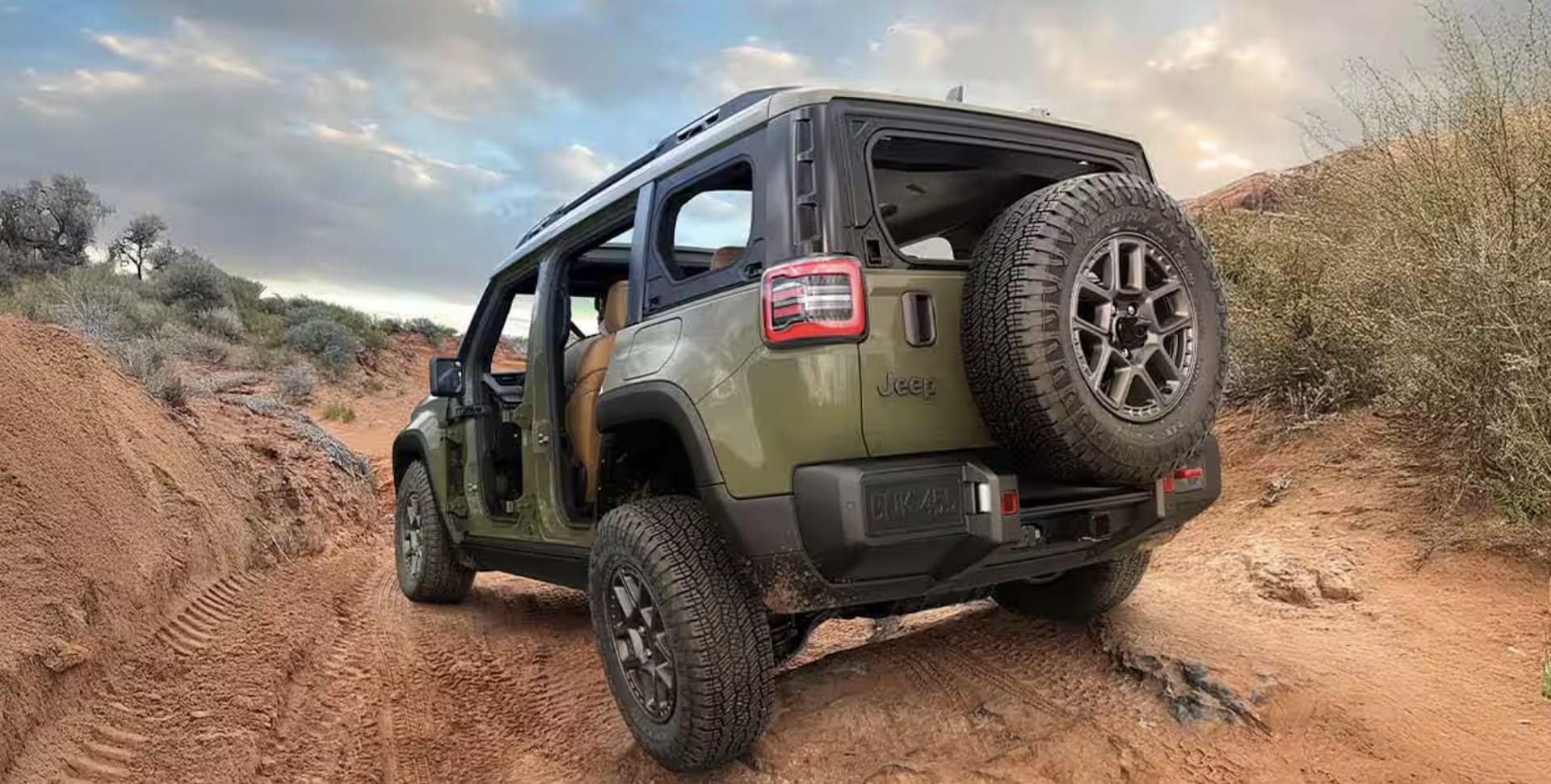
Every conversation we have about the 2026 Jeep Recon reaches the same place inside about four minutes. Somebody says: it looks great, but what happens in February? Fair, and the Recon research hub collects every answer in one place if you want them all at once.
It is a fair question and it deserves a real answer rather than a brochure one. Cold does cost an electric vehicle range. That is true of all of them and there is no point pretending otherwise. What is also true, and what almost nobody brings up, is that the way people actually drive on the Seacoast is the driving an EV is best at.
The number that flips the argument
The EPA rates the Recon at 222 miles of combined range. Split that out and it reads: 250 miles in the city, 196 on the highway (fueleconomy.gov).
Read that twice, because it is the reverse of every gas car you have owned. A gas engine is at its worst in stop-and-go and its best at a steady 65. An electric drivetrain is the other way round: regenerative braking puts energy back in the battery every time you lift off, and there is no idling to burn through. Steady highway speed returns nothing and pushes a lot of air.
Now look at how you actually drive. Dover to Portsmouth. Exeter to Portsmouth. School, the shops, the rink, the office. Route 16 in traffic, Lafayette Road at five o'clock, the Piscataqua River Bridge backed up on a Friday. That is the city cycle almost end to end, which is the 250-mile number, not the 196-mile one. The specs page has the rest of the figures if you want to see how the rating is built.
So what does winter actually take off it?
A cold battery delivers less than a warm one, and cabin heat draws from the same pack that moves the car. Plan on meaningfully less than the rated figure on a hard January morning. We are not going to put a percentage on that, because it depends on your commute, your right foot and how cold it actually gets.
Here is what makes it a non-event for most people: if you have a driveway or a garage, a 240-volt Level 2 charger fills the Recon from 5 to 80 percent in about 6.8 hours. You plug in at night and leave full every single morning. A 40-mile round trip out of a 222-mile car, with a full battery every day, is not a range problem in any month.
Two habits do the rest. Precondition the cabin while the car is still on the charger, so the heat comes from the wall rather than the battery. And if you are heading somewhere long, the range and charging page walks through DC fast charging, which takes about 28 minutes from 5 to 80 percent, or roughly 100 miles in ten.
Range is only half a Seacoast winter. The other half is traction.
This is where the Recon stops being an EV question and starts being a Jeep one. Every Moab, which is the only trim, leaves the factory with hardware most vehicles charge extra for, and the off-road capability page goes through all of it in detail:
| Standard on every Recon Moab | What it does in February |
|---|---|
| 33-inch all-terrain tires | Real tread and real sidewall, from new. Most SUVs need a tire budget to get here. |
| 9.1 inches of ground clearance | An unploughed driveway or the berm the plough left across it stops being a decision. |
| Selec-Terrain with a Snow mode | Softer throttle and a torque split tuned for low grip, on a dial. |
| Rear electronic locking differential | Both rear wheels turning together when one is on ice. |
| A motor at each axle | No driveshaft in between, so torque moves front to rear faster than a mechanical system can react. |
| 6,112 pounds with the battery in the floor | Weight down low. It plants itself on a glazed Route 1A rather than skating across it. |
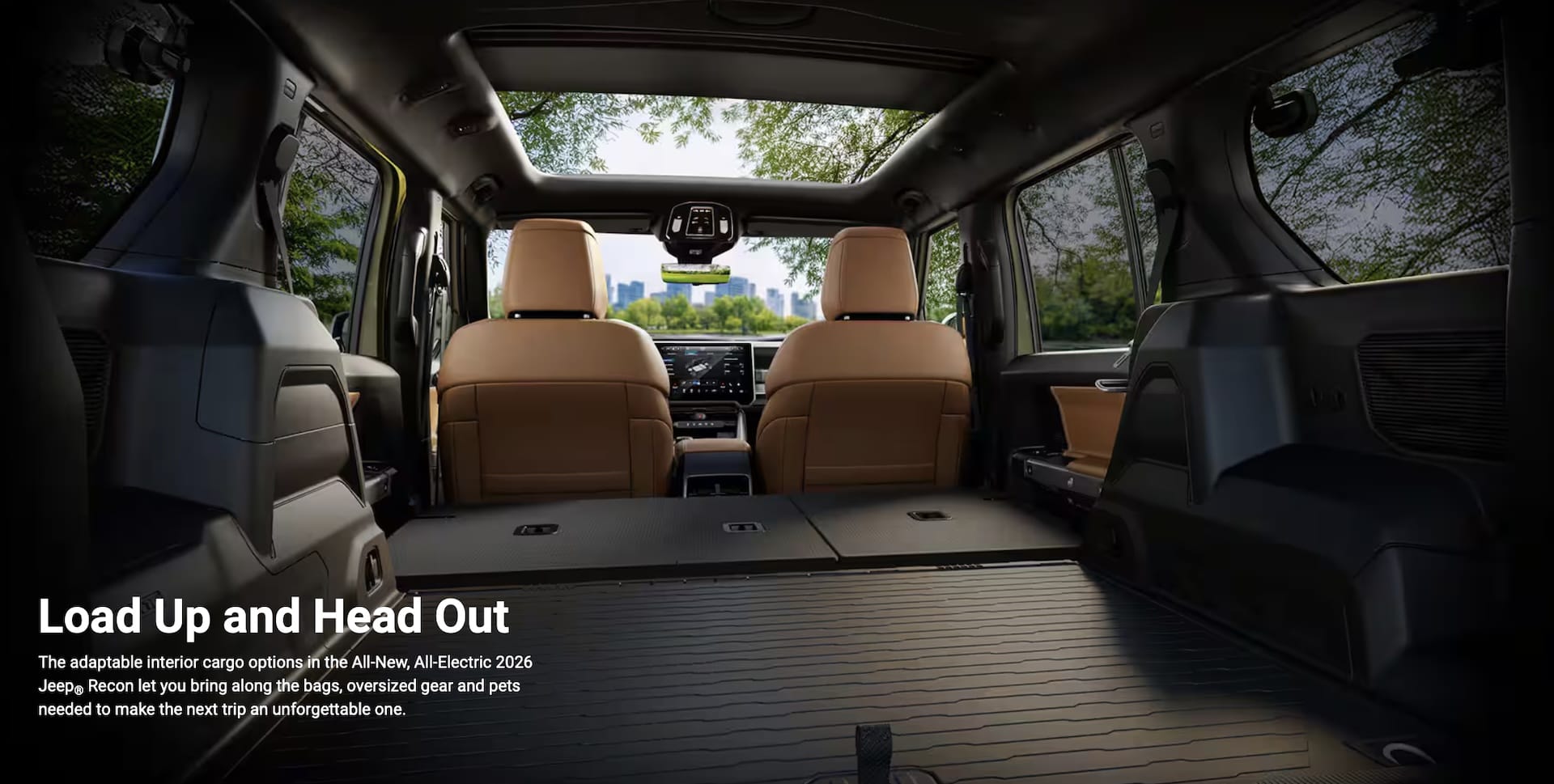
The last two are worth sitting with. A conventional four-wheel-drive system has to sense slip, then move torque mechanically. The Recon commands two independent motors, so it can trim power at whichever end is losing grip in the time a mechanical system is still deciding. On a shore road after a nor'easter, that is not a specification. That is the car keeping its line. If you are carrying a family through all of it, the cargo and interior page covers what fits around them.
And salt? That is the part people should ask about more.
Corrosion is what actually kills vehicles on this coast: road salt from November into March on top of salt air the rest of the year. It is a fair thing to worry about with a high-voltage system underneath you, and the technology and safety page covers the rest of what is built into the car.
Jeep seals and waterproofs the battery pack, both drive modules and the wiring that runs between them, and the pack sits behind a full suite of high-strength steel underbody shields. The expensive part is the protected part.
What is not protected any better than on a gas Jeep is the ordinary stuff: brake hardware, fasteners, suspension components. So the advice is the same as it always was. Wash the underbody through the salt season. Book it with the tire rotation and you have covered nearly everything this coast asks of the car. The maintenance schedule is short: a rotation every 5,000 to 7,500 miles, a fluid check every 25,000, and no oil changes ever.
Who this actually suits, and who it does not
We would rather sell you the right Jeep than the newest one, so here is the honest split.
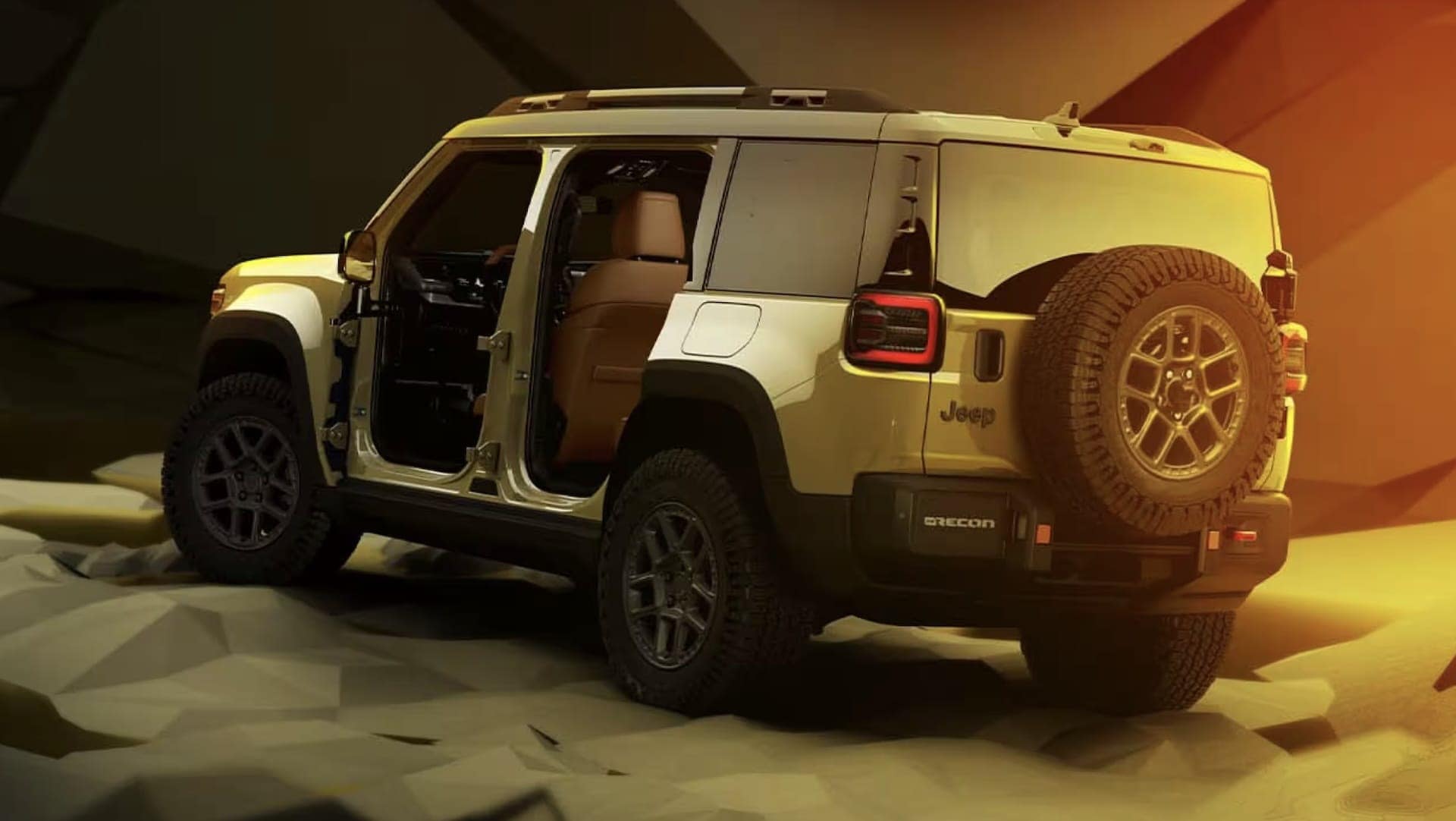
A Recon fits you if you drive locally most days, you can plug in where you sleep, and you want a Jeep that is quick, quiet and still wears a Trail Rated badge. 650 horsepower, three and a half seconds to sixty, doors that come off in May, and no fuel stops between now and next winter. Read the trim and options page for what to add, and the off-road page for where it will and will not go.
A Wrangler fits you better if you tow more than 3,300 pounds, you crawl technical rock and want a 4:1 low range, or you park on the street with nowhere to plug in. All three are real reasons and we stock plenty of Wranglers. That comparison page is written straight, with neither vehicle flattered.
If you are somewhere in the middle, the fastest way to settle it is to drive both back to back. We can usually do that in one visit.
Come and see one
We are Jeep Portsmouth, at 2355 Lafayette Rd, Portsmouth, NH 03801, a few minutes off I-95 and an easy run from Dover, Exeter, Hampton, Somersworth and over the bridge from Kittery and York. Recon supply is limited at launch, so call ahead: (603) 431-8900.
If you just want quick answers before you drive over, the Recon FAQ page has thirty of them.
Prices shown are MSRP and carry no tax, title, registration or dealer-installed options. EPA range and MPGe are ratings; real-world range moves with weather, terrain, driving style and load.